Members only
I am incredibly grateful to my predecessor and can only congratulate her on 14 successful years at the helm of the RUSI Journal. I am thrilled to have taken over after a short interregnum and I can promise two things as we move forward. First, there will be a huge degree of continuity. The Journal’s place at the intersection of academia, policy and practice is the source of its strength and relevance, and I will always endeavour to uphold the standards and quality of our content. Second, as happens with any fresh set of eyes, I aim to introduce a few tweaks along the way. There will be more detail about these minor changes in the next issue but, in brief, alongside the gold-standard research articles, I intend to champion the voice of professionals from across national and international security communities. The result should be a good mix of theoretical perspectives and the reality of practical application in the world today.
I come to RUSI from a multifaceted background. I will not repeat my online CV here, but readers may wish to be aware that I was a career naval officer who, for the past decade and a half, also flirted with academia and the world of ideas. I have worked at sea, ashore, in the Ministry of Defence and overseas. I have affiliations with several universities, and have worked closely with British think tanks, including RUSI. That means that my new role is simultaneously familiar but also a departure from my past. At times it feels like I am looking at the same mountain from a different valley, and that is exciting.
This is a bumper issue of the RUSI Journal, and I hope that readers will find the articles original and thought provoking. I have grouped them together into five broad themes which I believe are important – the weapons, theories and realities of war today, plus societal resilience and the ongoing realignment of the international system.
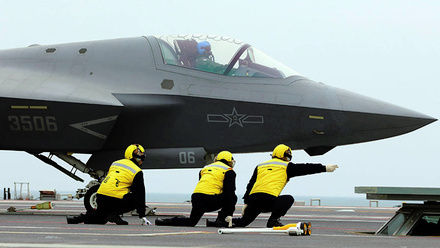
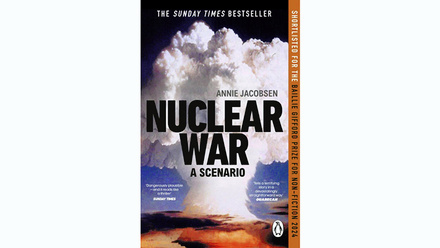
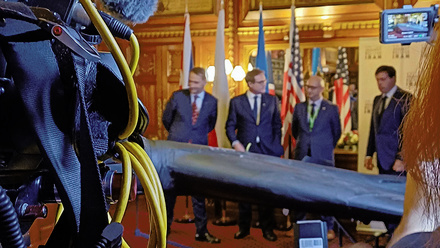
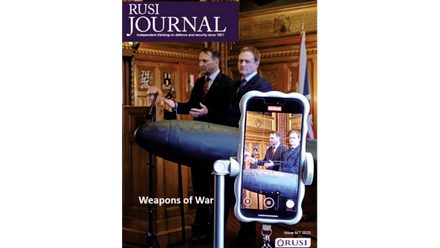
We begin with a short feature on the unveiling of an Iranian Shahed-136 drone in the Houses of Parliament in October 2025, an event which sent definite messages to target audiences and elicited a diplomatic response from Tehran. Readers’ received wisdom is then challenged in an article debating the decision points of nuclear confrontation between great powers – a topic which, frighteningly, no longer seems consigned to the annals of Cold War history. Finally in that section we get to grips with China’s J-35 fighter programme and its potential for export, particularly to countries which cannot afford American or European fifth generation aircraft. Is the West pricing itself out of export diplomacy?
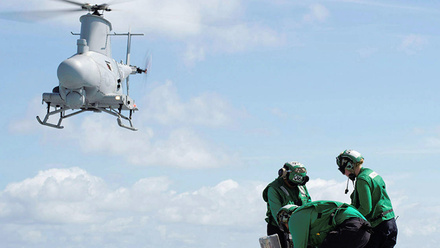
For those among us brought up on the principles of agility, offsets and doing more with less, being told that manoeuvre is not the be-all-and-end-all of warfare can come as a slap in the face. But that is precisely what one author does in this issue, arguing that if manoeuvre is not dead then it is at least in a critical condition. It is time, he says, to start taking attrition seriously again, a point which may be being born out on the battlefields of Ukraine. Ukraine, of course, is the prime testing ground for drone warfare and one must at times wonder if technology is racing ahead of concepts and doctrine. Readers are treated to a different theoretical perspective in another article, the authors this time suggesting a ‘liminal’ operating environment for uncrewed aerial systems in messy, dirty, contested air littoral spaces.
The increasingly important topic of societal resilience comes next. We are all familiar with the concept of collateral damage in a kinetic sense, but perhaps the aperture needs to be widened. In an investigation into the ethical dimensions of intended and unintended consequences of deception, one author argues that we need a new framework; readers will decide if they agree, or whether they are satisfied that non-combatants have always been on the receiving end of tricks and ruses since the dawn of time. Another article follows, asking what NATO might learn about resilience from the natural world. Unsurprisingly, the answer is quite a lot.
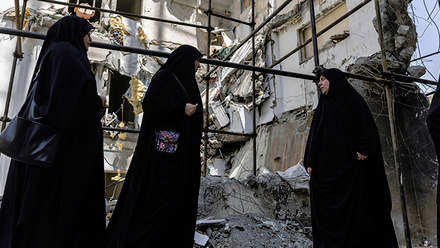
Three articles bring the realities of current conflicts to the fore. We have electromagnetic operations in Ukraine, an analysis of the evolution of open source intelligence in NATO, and a behind-the-lines review of the impact of the 2025 Iran-Israel 12-Day War. It is always fascinating, if at times disheartening, to learn more about the sharp end of war and conflict. The final article in this issue fits neatly into one of RUSI’s new focus areas – international system realignment, or the changing nature of global geopolitics and geoeconomics. We are taken to the South Atlantic where oil (why is it always oil?) is helping to drive diplomatic and security relationships.
This is a long editorial for a large issue to round off 2025. Please enjoy the superb collection of top-quality research and analysis.
Kevin Rowlands