Members only
One of the difficulties of trying to address contemporary defence and security issues in a journal with a fairly lengthy production timeline, is that I find myself regularly having to begin an editorial with ‘at the time of writing…’, but needs must.
At the time of writing (mid-March 2026), the Middle East is at war. Iran has been attacked by the US and Israel, and the tactical and technical successes are obvious. A great proportion of the Islamic Republic’s leadership has been killed, Iranian armed forces have been devastated and counterattacks have been dealt with in a quite straightforward manner. However, on the flip side, allies and partners who once would have stood firm with the US have decided to sit this one out despite pressure from US President Donald Trump, and Iran has managed to effectively close the Strait of Hormuz to maritime traffic. The global economic consequences are starting to bite.
At your time of reading, the situation could have substantially changed, of course. But if it hasn’t, then there is a likelihood that we might be at the early stages of a humanitarian crisis in additional to the other turmoil the region faces.
It might seem fortuitous, then, that even prior to the start of the war, we had decided to focus on the Middle East for this issue of the RUSI Journal. The editorial team cannot claim to possess insider knowledge or strategic foresight – we simply believed that this geopolitically critical part of the world had slipped from the headlines. Western powers are focused on Russia and China, and have reduced their forces in the Middle East, despite mischief from Iran and its proxies. The US had declared the Trump Corollary to the Monroe Doctrine in a national security strategy that prioritised the western hemisphere. The UK had declared a ‘NATO-First’ policy which, despite the rhetoric, has all-but-become ‘NATO only’.
But the world does not always neatly fall in line with strategic choices.
There are some fascinating articles in this issue. At the time of writing (that phrase again), Israel has been conducting an incredibly bold and effective leadership decapitation strategy against Iran. One of our articles, written and submitted months before the current war, tracks how leadership decapitation has been a feature of the fight against the Shi’ite Crescent for at least the past 20 years. What we are seeing today is not new, it is simply bigger and faster. Another article tackles the use of proxies in the Middle East. Again, prescient.
The Middle East is not, of course, coterminous with the Persian/Arabian Gulf. We need to think wider. We have an article which focuses on the Levant, a region with a tortuous history stretching back centuries, which is seeing conflict today. One former military commander goes further still, questioning, in a professional insight, how the current war might affect Australia and the Indo-Pacific.
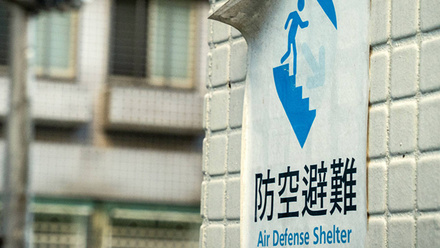
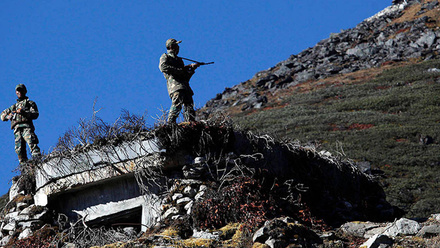
Finally, this issue is not exclusively about the Middle East. We have some brilliant, original and thought-provoking articles on intelligence analysis, the evolution of special operations, India–China relations, and even defensive rewilding – an environmental approach to military defences. We have a commissioned piece from our photo-journalist on living in Taiwan with the threat of China, and don’t miss our ‘From the Archive’ report, which takes us back to 1947.
Hopefully, there is something for everyone.
Kevin Rowlands